Schools "Resisting External Control" All Over Again
Some Schools Emerged in the 1800s

Hybrid schools were well represented at the 2024 Emerging School Models conference hosted by the Program on Education Policy and Governance at Harvard University last month. I was there on a panel with Jessalyn Franchimone from Julian Charter School in San Diego, CA, Kristen Easterling from the Samuel Everett School of Innovation in Maryville, TN, and Sylvia Duarte from St. John Bosco Academy in Cumming, GA, and Dan Hamlin from the University of Oklahoma to discuss parenting in charter, public, and private hybrid schools.
The formal sessions did not cover a lot on the idea of “accountability,” but that has become a more common discussion these days, especially in light of all the new ESA programs passing around the country.* It is an issue that I am still frankly working through in my own mind too, so you will not get a glib answer to this problem in this post. I will say that in a lot of what I hear and read, I still sense the pull of gravity from 2000s-era accountability based on testing and standardization. A lot of people and schools in this field showed up post-COVID, but a lot also existed well before that, and built their schools in the face of NCLB, Common Core, Race to the Top, “high quality” charter school demands, etc. And the field today wouldn’t exist without them.
James Tooley was a speaker at the conference, and has shown that people start up schools in all kinds of unwelcoming circumstances all over the world. And someone there reminded me of a bit from the Introduction of Little Platoons:
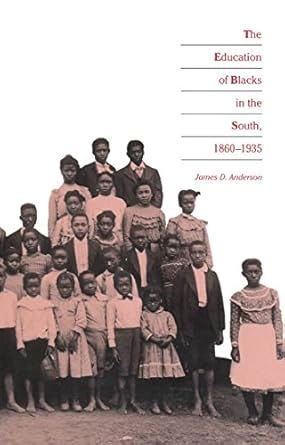
The idea of families and communities coming together to set up schools in tiny local contexts occurs throughout American history. Homeschooling and homeschool cooperatives (co-ops) are two examples. Another less appreciated but relevant example is that of “freedmen’s schools” after the Civil War. Ex-slaves in the American South, according to James Anderson, “emerged from slavery with a strong belief in the desirability of learning to read and write.” John W. Alvord was made inspector of schools for the U.S. Freedmen’s Bureau in 1865, and he and his agents traveled through the former Confederate states to learn about the region’s educational status. The common expectation was that he would find very little going on. Instead, he found hundreds of these schools, in all of the large population centers and even in places the bureau had not visited before. He reported that “throughout the entire South an effort is being made by the colored people to educate themselves.” In North Carolina, he found “two colored young men, who but a little time before commenced to learn themselves, had gathered 150 pupils, all quite orderly and hard at study.” The U.S. government and philanthropic aid societies began sending teachers south, but very often when they got there found that the former slaves had already established schools to educate themselves. Though they might have been seen somewhat as postwar emergency measure, Alvord reported that “this educational movement among the freedmen has in it a self-sustaining effort.” Anderson finds that in 1867 “free schooling was sustained in Louisiana largely as a result of ex-slaves’ collective efforts,” and that in Georgia a mutual aid society “sustained in full or in part the operation of more than two-thirds of [the black population’s] schools.” While these schools were quite different in structure from hybrid homeschools—in some cases more formal, in others more like one-day schools—they do have some resemblance in spirit to today’s hybrid homeschools. Anderson notes that “ex-slaves, in general, initiated and supported education for themselves and their children and also resisted external control of their educational institutions.” When these U.S. government and other northern educators arrived, they often took over, undid, and/or replaced much of the work these ex-slaves had done to stand up educational institutions. They had some reason to “resist external control,” and had done significant work to build local schools, for their local communities, on their own. Hybrid homeschool groups are building their own local schools, and often surprising modern-day Alvords by simply going around them.
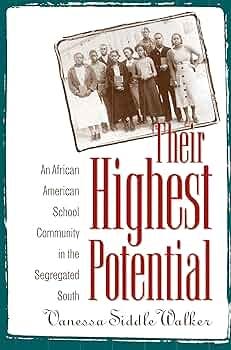
One of my dissertation advisors has written quite a lot about well-meaning people trying to “improve the quality” of schooling through “professionalism” and technocracy have ignored the tradeoffs that approach requires and have done damage to community crafted schools (and communities themselves).
Policymakers (and philanthropists, and others, etc.) would do well to remember not just the failures of NCLB/CCSS/RTT-style technocracy, but also the way the words “high quality” absolutely sucked the energy out of the charter school sector (it’s not dead yet though!)…and also the fact that America has a very, very long history of people creating interesting, entrepreneurial school ventures, which are then threatened by “external control.” Jack Coons was talking about the potential of communities starting up schools in the early 1970s. Alvord’s work shows there were a number of these a hundred years earlier (and we know there were some decades before that, too). Maybe we are talking more about a re-emergence of older school models, enabled by a combination of state homeschool laws, technology, COVID responses, and a new social acceptance of it all.
*We did talk a good bit about “accountability” at the recent second Heartland Hybrid and Microschools Summit in Kansas City.
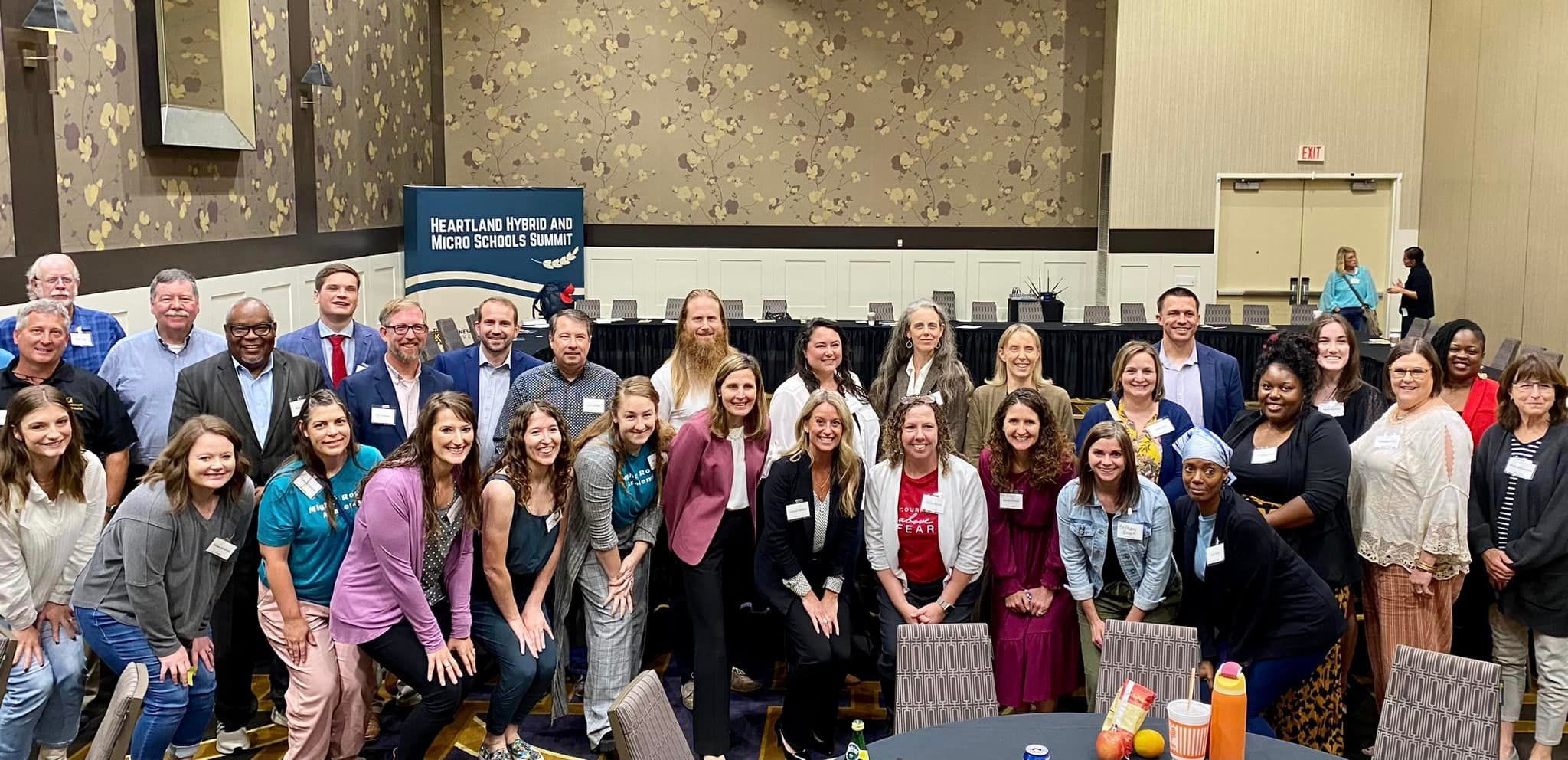
And we’ll do it again at the first Northeastern Hybrid and Microschools Forum outside Philadelphia in November. There is still room for you to join us there!